
"This would work; let's do it!"
This is a common statement heard in many companies, especially product-based ones, across all sizes and shapes. In today's era of LLMs, this statement is said all too easily because much of the work can be handled by AI coding agents. As a result, companies demand or at least expect the delivery process to take just a few days or hours, down from what used to take around a month. Whether that is actually happening everywhere is another story altogether.
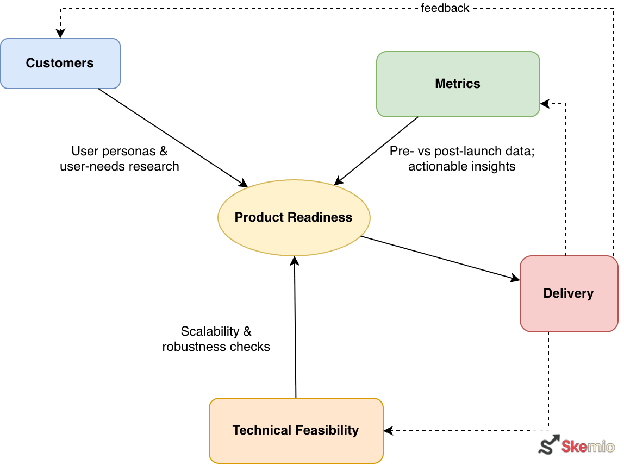
Today, I want to highlight how we actually reach that decision point: what processes and mechanisms should be used before we confidently say we are ready to build or deliver this product or feature.
This question is especially relevant for Product Managers. While established companies have dedicated roles for this, smaller companies often treat it as one of many responsibilities assigned to a single person. Since building features or the entire product itself has become easier, there is a common temptation to skip the research process and jump straight into development. However, focusing on and analyzing a few key areas can produce genuinely impactful results.
Customers
The primary pillar of any product is the customer. Who is your customer? Do you truly know them, their needs, and their behavior? Developing a persona for the targeted user is critical. As the saying goes, if your product is for everyone, it's for no one.
I heard a story a couple of months back, I'm not entirely sure of the original source, but the lesson resonated with me. A coffee brand was looking to expand into Japan. As you might know, Japan has historically been a tea-dominant country. How do you sell coffee to a population that prefers tea? This isn't a simple "sell me this pen" challenge where you force a product on anyone. It was a genuine strategy problem.
Someone suggested expanding there with a long-term plan: waiting 15 years. For some companies, 15 years sounds like a long time, but for others, it's worth it if the market opportunity is solid. To execute this, they created coffee-flavored candies for children. As those kids grew up enjoying the candy, they gradually developed a taste for coffee flavor. When the brand eventually opened coffee stores years later, those young adults sought out that familiar taste, and the venture succeeded.
Truly understanding your target customer and how to reach them strategically is essential.
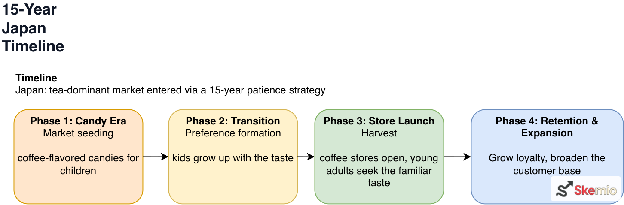
This is just one example of how companies of different sizes can approach customer strategy, which we can explore in greater detail another time.
Metrics
This domain covers pre-launch, post-launch, and ongoing metrics. While data is usually abundant, correctly interpreting it is what reveals meaningful insights.
Let's have another story about a retail giant around the 2010s. Their sales had stagnated, so they sought a way to grow both online and offline. After internal consultations, they applied machine learning to their customer purchase data to offer personalized recommendations. The system worked remarkably well, uncovering patterns that delighted shoppers.
However, one day, a customer complained to customer service, asking why his family was receiving recommendations for baby products when his children were older and there was no newborn in the home. A company representative looked into the profile and the algorithm's output. The system had flagged a specific shift in purchase patterns that statistically indicated pregnancy. The father was furious at the implication regarding his daughter. A few days later, the father called back to apologize, explaining that after a conversation with his daughter, he learned the recommendation was accurate.
Just FYI, I am no way, shape and form promote or indicating anything of this. While this story highlights privacy and predictive nuances, the takeaway remains: metrics can provide powerful insights when analyzed carefully.
Technical Feasibility
You might ask: if building software is easier than ever, why focus heavily on technical feasibility? Here, I am not referring to quickly vibe-coded features, but thoughtfully architected solutions. The debate isn't whether to use LLMs, but whether actual users will experience the seamless performance you intended.
Will the solution scale smoothly when thousands or hundreds of thousands of users arrive? You must collaborate closely with the engineering team to confirm that the feature delivers a strong user experience, scales reliably under load, and avoids technical bottlenecks.
- product management
- product discovery
- customer personas
- product metrics
- technical feasibility
- product strategy