Verifying Stripe Webhooks Securely
Flowcharts & Algorithms diagram · made in Skemio
What it shows
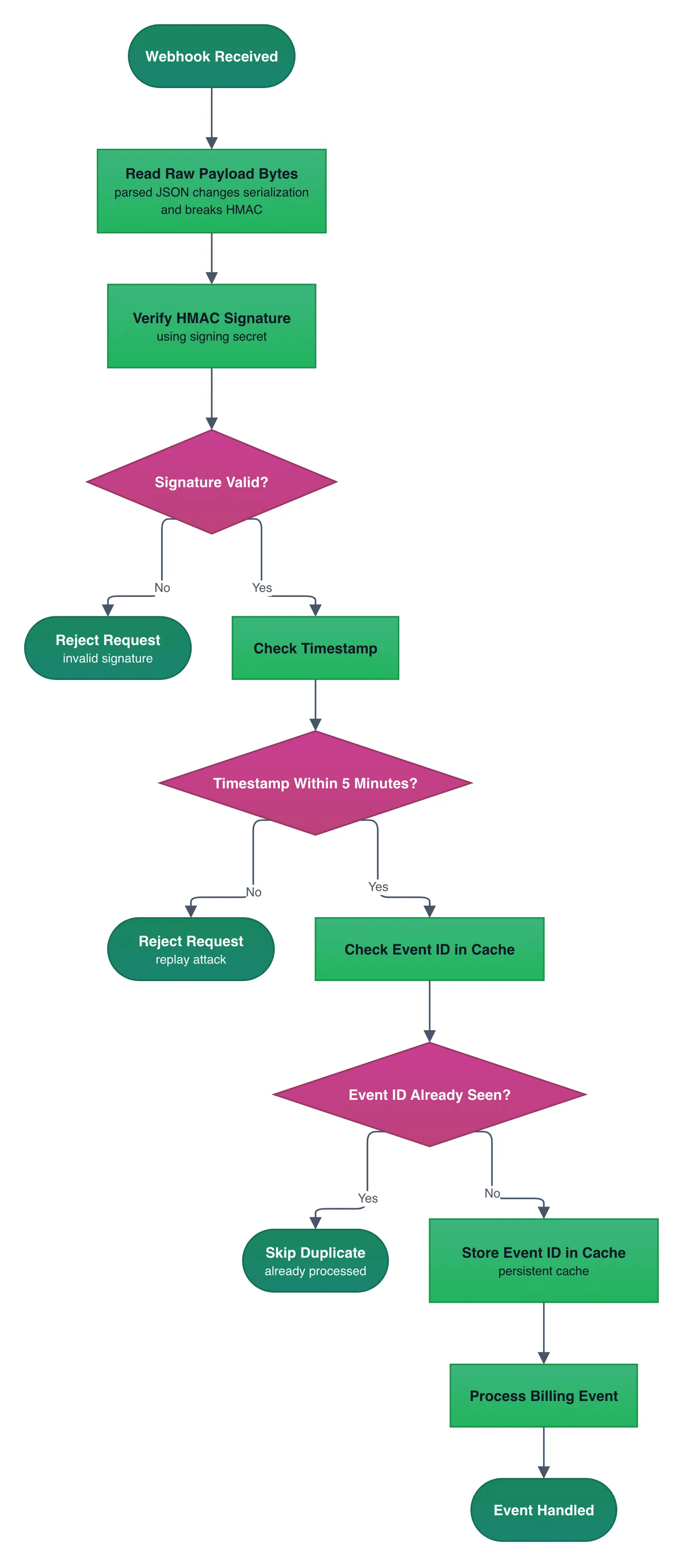
- Read raw payload bytes; parsed JSON changes serialization and breaks HMAC.
- Reject timestamps older than 5 minutes to prevent replay attacks.
- Store the event ID in a persistent cache to ensure idempotency.
The takeaway
Verify raw bytes first, enforce a timestamp tolerance window, and deduplicate by event ID.
- #SystemDesign
- #Webhooks
- #BackendDev
- #CyberSecurity
- #Stripe
- #APIs